Learning to write a name is a special step for every child. It is often one of the first things a child learns when starting school.
If you are searching for writing name practice, you may want fun ways to help a child write their name with ease.
Writing name practice means learning to write your own name or another person’s name by using letters, lines, and simple writing steps.
It helps children learn the alphabet, improve hand control, and build confidence.
Parents and teachers often use name-writing activities at home and in school.
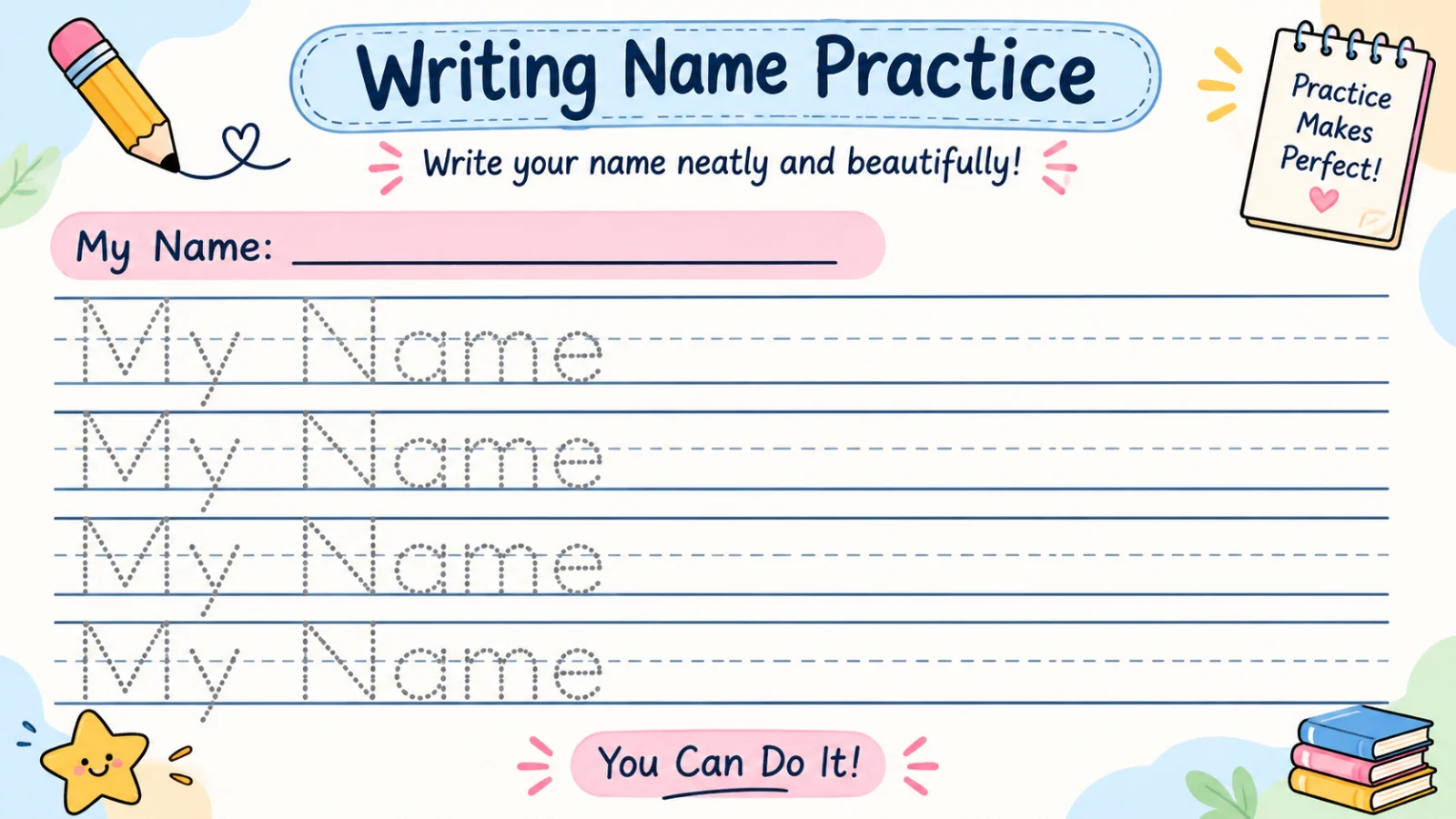
These activities can include tracing letters, copying names, coloring letters, and writing names on worksheets.
The best part is that name practice does not need to feel like hard work. You can make it fun with colors, games, cards, and simple daily tasks.
In this guide, you will find creative writing name practice ideas, cute activities, fun games, and easy ways to help children learn. You will also find name examples and useful tips for better handwriting.
What Does Writing Name Practice Mean?
Writing name practice means learning to write a name by tracing, copying, and writing its letters without help. It is a basic learning activity for young children. It helps them know their name, learn letter shapes, and improve pencil control.
Name-writing practice has no personal-name origin or baby-name meaning. It is an educational phrase used by parents, teachers, and learners. It is popular in preschool, kindergarten, and early primary school.
The activity can also help children feel proud of their work. A child who can write their own name may feel more ready to take part in school tasks. Every child learns at a different speed, so short and happy practice sessions work best.
Why Is Writing Name Practice Important? ✏️
Writing a name is more than making letters on paper. It is a useful skill that helps children learn and grow. A name is also one of the first words many children learn to read and write.
Here are some key benefits:
- Letter learning: Children learn how letters look and sound.
- Hand control: They learn to hold and move a pencil.
- Memory: They learn the order of letters in their name.
- Confidence: They feel happy when they write on their own.
- School skills: They get ready for worksheets and classroom tasks.
- Self-awareness: They learn to spot their own name on books and bags.
Do not worry if a child writes some letters backward at first. This can happen while they are learning. Give them time and praise their effort.
Cute Writing Name Practice Ideas 🧸
Cute activities can make learning feel like play. They are great for toddlers and young children who are just starting to write. Use bright colors, simple shapes, and fun tools to keep them interested.
1. Rainbow Name Writing
Meaning: Write each letter of the child’s name in a new color. This helps them enjoy letter practice.
2. Bubble Letter Names
Meaning: Draw large bubble letters and let the child color each one.
3. Star Name Practice
Meaning: Add small stars around the name after each writing task.
4. Heart Letter Writing
Meaning: Put each letter inside a heart shape for a sweet writing activity.
5. Teddy Bear Name Cards
Meaning: Add a teddy bear picture to a card with the child’s name.
6. Flower Name Writing
Meaning: Draw flowers around each letter to make a fun worksheet.
7. Cloud Name Tracing
Meaning: Write the name inside a cloud shape and let the child trace it.
8. Smiley Face Letters
Meaning: Add a small smiley face to each letter after it is written.
9. Butterfly Name Art
Meaning: Decorate a name card with colorful butterfly drawings.
10. Colorful Name Blocks
Meaning: Write one letter on each colored block and arrange them in the right order.
Funny Writing Name Practice Games 😂
Children often learn faster when they are having fun. Funny games can make writing less scary and more exciting. Try these simple ideas during playtime or short learning breaks.
1. Silly Voice Name Writing
Meaning: Say each letter in a funny voice while the child writes it.
2. Monster Letter Names
Meaning: Turn each letter into a funny monster with eyes and teeth.
3. Dancing Pencil Game
Meaning: Move the pencil like a dancer while forming each letter.
4. Funny Hat Name Cards
Meaning: Draw silly hats above the letters in a child’s name.
5. Secret Name Mission
Meaning: Ask the child to find and write their name like a secret agent.
6. Wiggly Letter Race
Meaning: Write letters in a playful style while keeping their shapes clear.
7. Silly Animal Names
Meaning: Add animal drawings beside each name for a fun activity.
8. Name Detective Game
Meaning: Hide name cards and ask children to find the correct one.
9. Funny Face Writing
Meaning: Turn written letters into funny faces with simple drawings.
10. Name Treasure Hunt
Meaning: Hide letters around the room and ask the child to collect them in the right order.
Unique Writing Name Practice Activities 🌈
Some children enjoy new and creative ways to learn. These unique activities use different tools and materials. They can make everyday writing feel fresh and exciting.
1. Sand Tray Writing
Meaning: Let children write their names in a tray of clean sand using a finger.
2. Salt Letter Practice
Meaning: Use a shallow tray of salt to form each letter.
3. Playdough Name Making
Meaning: Roll playdough into long shapes and form the letters of a name.
4. Sticker Name Art
Meaning: Place small stickers around a written name.
5. Finger Paint Names
Meaning: Use washable paint to form letters with a finger.
6. Chalk Name Practice
Meaning: Write names on a chalkboard or outdoor floor.
7. Leaf Letter Art
Meaning: Arrange clean leaves into the shapes of letters.
8. Button Name Craft
Meaning: Use large craft buttons to make the shape of each letter with adult help.
9. Foam Letter Practice
Meaning: Arrange foam letters to spell a name before writing it.
10. Water Brush Writing
Meaning: Use a wet paintbrush to write names on a chalkboard or suitable outdoor surface.
Cool Writing Name Practice Ideas 😎
Cool activities are great for children who like games, art, and bright designs. They can also help older children improve their handwriting. Try these ideas to make name practice more exciting.
1. Graffiti Name Art
Meaning: Write a name in bold, playful letters with bright colors.
2. Neon Name Writing
Meaning: Use bright marker colors to make each letter stand out.
3. Comic Book Name Style
Meaning: Write names in the style of comic book titles.
4. Space Name Design
Meaning: Decorate a name with stars, planets, and rockets.
5. Superhero Name Cards
Meaning: Turn a child’s name into a superhero-style logo.
6. Sports Name Writing
Meaning: Write a name inside a picture of a football, ball, or sports shirt.
7. Digital Name Practice
Meaning: Use a simple writing app or tablet activity to trace letters.
8. Pixel Name Art
Meaning: Build letters from small colored squares.
9. Glow Letter Design
Meaning: Use bright colors and dark paper to make letters stand out.
10. Racing Name Cards
Meaning: Write a name on a card with a fun racing car design.
Romantic and Sweet Name Writing Ideas ❤️
Sweet name-writing activities are a lovely way to help children make cards for people they love. They also work well for family gifts and special days. Keep the words simple and let children add their own drawings.
1. Mom’s Name Card
Meaning: Write the mother’s name on a card with a heart.
2. Dad’s Name Art
Meaning: Create a name card for a father with a special message.
3. Best Friend Name Card
Meaning: Write a friend’s name and add a happy note.
4. Love Letter Names
Meaning: Practice writing a loved one’s name on a handmade card.
5. Family Name Tree
Meaning: Write family members’ names on branches of a paper tree.
6. Friendship Name Bracelet
Meaning: Add letter beads to spell a friend’s name with adult help.
7. Birthday Name Card
Meaning: Write the birthday person’s name on a colorful card.
8. Thank You Name Art
Meaning: Write someone’s name on a thank-you card.
9. Kindness Name Notes
Meaning: Write names on small notes with kind words.
10. Memory Name Book
Meaning: Make a small book with names of family members and friends.
Simple Writing Name Practice for Beginners 🌱
Beginners need simple tasks that are easy to follow. Start with large letters and clear lines. Do not rush the child to write fast or make every letter perfect.
1. Name Tracing
Meaning: Write the name with dotted letters and let the child trace over them.
2. Name Copying
Meaning: Show a clear name model and ask the child to copy it below.
3. First Letter Practice
Meaning: Start by teaching the first letter of the child’s name.
4. Letter Matching
Meaning: Match printed letters to the letters in the child’s name.
5. Missing Letter Game
Meaning: Leave out one letter and ask the child to fill it in.
6. Name Dot Writing
Meaning: Use dots to show the shape of each letter.
7. Large Letter Practice
Meaning: Write the name in large letters before moving to smaller writing.
8. Name Line Practice
Meaning: Use writing lines to help children keep letters in place.
9. Copy and Check
Meaning: Ask the child to copy a name and compare it with the model.
10. Free Name Writing
Meaning: Let the child write their name without a guide when they feel ready.
Writing Name Practice for Preschool Children 🎒
Preschool is a good time to start simple name activities. Children can learn to notice their names and explore how letters are formed. Keep each task short and use lots of praise.
1. Name Recognition Cards
Meaning: Show cards with different names and help children find their own.
2. Trace and Color
Meaning: Let children trace their name and color the letters.
3. Name Puzzle
Meaning: Cut a name into separate letter cards and ask the child to put them in order.
4. Letter Sticker Sheet
Meaning: Use letter stickers to build a child’s name.
5. Name on a Bag
Meaning: Help children write their names on a school bag label.
6. Daily Name Board
Meaning: Let each child write their name on a classroom board.
7. Name and Picture Match
Meaning: Match a child’s photo with their written name.
8. Playdough Letter Mats
Meaning: Use letter outlines as guides for making letters with playdough.
9. Name Song Activity
Meaning: Sing the letters of a child’s name while pointing to each one.
10. Name Stamp Practice
Meaning: Use letter stamps to create names on paper.
Writing Name Practice for Kindergarten 📚
Kindergarten children can start working on letter size, shape, and spacing. They can also try writing their full names when they are ready. These activities help build good habits without making practice feel too hard.
1. First and Last Name Practice
Meaning: Learn to write both parts of a full name.
2. Name on Ruled Paper
Meaning: Practice writing names between clear guide lines.
3. Uppercase and Lowercase Names
Meaning: Learn how capital and small letters look in a name.
4. Name Copy Worksheet
Meaning: Copy a name from a model onto a blank line.
5. Letter Order Game
Meaning: Arrange letter cards in the correct order.
6. Name Writing Race
Meaning: Practice writing a name neatly, not just quickly.
7. Name Sentence Practice
Meaning: Write a short sentence that includes the child’s name.
8. Name Book Cover
Meaning: Create a small book cover with the child’s name.
9. Name Checklist
Meaning: Check that each letter is present and in the right order.
10. Weekly Writing Chart
Meaning: Record writing practice over several days to see progress.
Creative Writing Name Practice for Older Kids 🎨
Older children may want more than basic tracing. Creative tasks can help them improve their handwriting and develop their own style. They can also learn to write names in different fonts.
1. Cursive Name Writing
Meaning: Practice joining letters in a smooth cursive style.
2. Calligraphy Name Art
Meaning: Write names with decorative strokes and careful letter shapes.
3. 3D Name Letters
Meaning: Draw letters with depth and shadow.
4. Name Typography
Meaning: Explore different letter styles and font designs.
5. Decorative Initials
Meaning: Make the first letter of a name large and artistic.
6. Name Logo Design
Meaning: Turn a name into a simple personal logo.
7. Handwriting Style Challenge
Meaning: Write the same name in three different styles.
8. Name Poster
Meaning: Create a poster with a name as the main design.
9. Letter Shadow Practice
Meaning: Add light shadows around letters to make them stand out.
10. Personal Signature Practice
Meaning: Learn to write a neat and clear personal signature when age-appropriate.
Daily Writing Name Practice Routine ⏰
A short daily routine can help children build confidence. You do not need a long lesson. Five to ten minutes may be enough for a young beginner, depending on their age and interest.
Here is a simple routine:
- Minute 1: Look at the name and say each letter.
- Minutes 2–3: Trace the name.
- Minutes 4–5: Copy the name on a blank line.
- Minutes 6–7: Try writing it without help.
- Minutes 8–10: Decorate the name or play a letter game.
You can change this routine to fit the child’s needs. Some children may need more time to learn how to hold a pencil. Others may be ready to write their full names.
The goal is steady progress, not perfect handwriting.
Tips for Better Name Writing Practice ✍️
Good writing habits start with small steps. Children need time to learn how to hold a pencil, form letters, and use space on a page.
Try these helpful tips:
- Start with large letters: Big letters are often easier for beginners to trace.
- Use clear examples: Show the correct spelling of the name.
- Practice slowly: Let the child focus on letter shape.
- Use short sessions: Stop before the child feels tired.
- Praise effort: Notice progress, not just perfect results.
- Choose the right tools: Use child-safe pencils, crayons, and paper.
- Make it fun: Add games, colors, and simple rewards.
- Practice often: A little practice each day can help.
- Allow mistakes: Mistakes are part of learning.
- Celebrate progress: Keep old worksheets to show how much the child has learned.
Remember that every child develops at their own pace. If writing feels very hard or causes ongoing distress, speak with the child’s teacher or a qualified learning professional.
FAQs About Writing Name Practice
1. What is writing name practice?
Writing name practice is the process of learning to write a name by tracing, copying, and forming letters. It helps children build early writing skills.
2. At what age should a child start name writing?
Children can start exploring letters and their names during the preschool years. There is no single age that fits every child. Begin with fun activities and follow the child’s development.
3. How can I make writing name practice fun?
Use colorful markers, tracing sheets, sand trays, playdough, puzzles, and name games. Keep practice short and praise the child’s effort.
Conclusion
Writing name practice is a simple and useful way to help children learn letters and build early writing skills. It can also help them feel proud when they learn to write their own names.
You can choose from cute, funny, cool, unique, and creative activities. Try tracing, coloring, letter games, name cards, and simple daily writing tasks. For older children, cursive writing and name art can make practice more exciting.
The best activity is one that your child enjoys. Start with easy steps, give them time, and celebrate each small success. With patience and regular practice, writing a name can become a fun and happy part of learning.

At NameBloomz, we share interesting author biographies, literary insights, and stories about famous writers.